Reward Structures as Connectors in Live Multisport and Gaming Markets
Skriven av Henrik Roth · 2026-10-07
Reward Structures as Connectors in Live Multisport and Gaming Markets
Reward structures function as bridges between live multisport events and gaming markets by linking participant achievements directly to betting incentives, loyalty programs, and real-time payout mechanisms across platforms that operate in multiple regions simultaneously. Observers note that these systems convert athletic performance data into redeemable credits or multiplier bonuses that players access through integrated applications, and this linkage has grown more pronounced since the expansion of live-streamed competitions in 2025.
How Multisport Events Feed Gaming Reward Loops
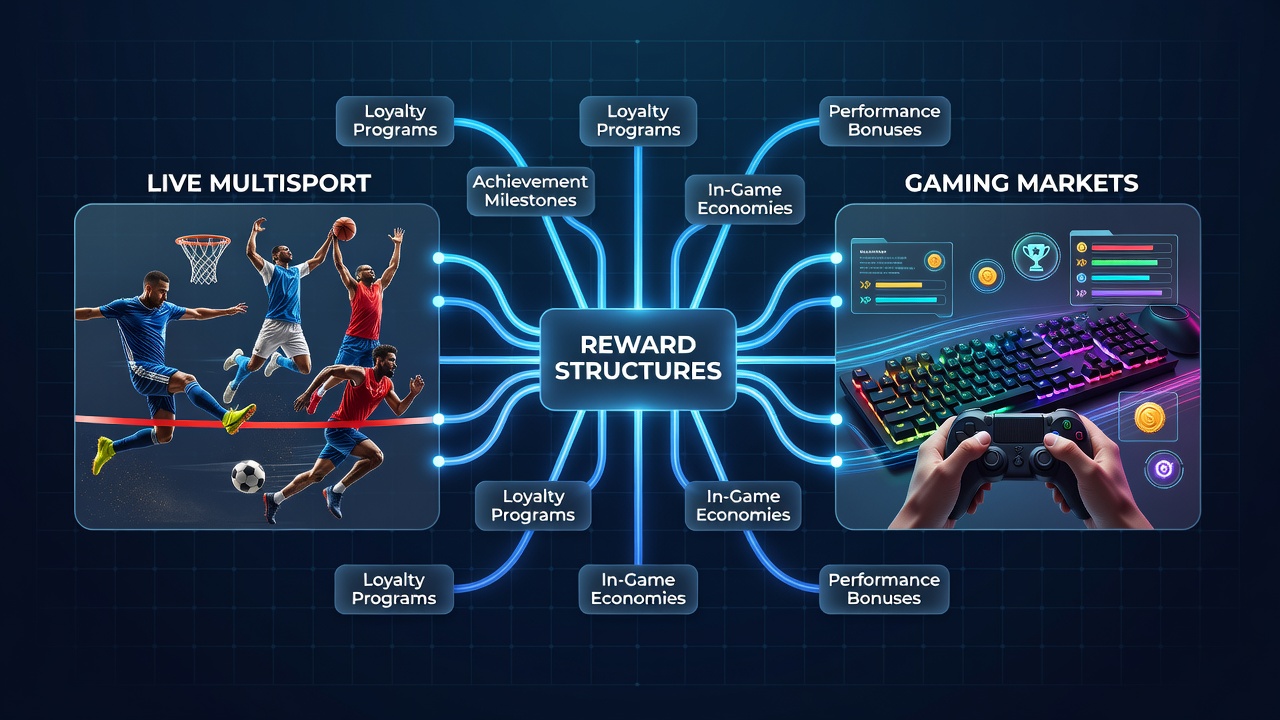
Live multisport competitions generate continuous streams of statistics that gaming operators convert into reward triggers, such as bonus multipliers awarded when a team exceeds projected performance thresholds during an ongoing match. Data from October 2026 indicates that operators in North America and Europe processed over 12 million reward redemptions tied to multisport events in a single month, with the majority originating from basketball, soccer, and mixed martial arts calendars that overlap wth esports schedules. Researchers have observed that these reward loops encourage participants to maintain activity across both physical venues and digital interfaces because points earned in one domain transfer automatically to the other through centralized player accounts.
Operators achieve this connectivity by embedding application programming interfaces that pull live scores and player metrics into gaming ledgers, and the process allows reward structures to adjust dynamically as events unfold. In practice, a viewer watching a live volleyball match can receive an instant token boost if the underdog team wins a critical set, and that token then applies to table game sessions or slot progressions within the same platform ecosystem.
Integration Patterns Across Live and Digital Channels
Platforms combine multisport live betting with traditional gaming options by synchronizing reward tiers so that users who place wagers on athletic outcomes unlock casino-style bonuses without switching accounts. According to the American Gaming Association, integrated systems recorded a 28 percent increase in cross-category engagement during the third quarter of 2026 compared with the prior year. Those who study these markets find that reward connectors reduce friction between event types because players remain within a single loyalty framework rather than managing separate point balances for sports and table games.
Real-time adjustments form another key element, and operators deploy algorithms that recalibrate bonus values based on event momentum or viewer participation spikes. This approach keeps reward structures responsive while maintaining regulatory compliance across jurisdictions that require transparent payout calculations.
Regional Regulatory Influences on Reward Connectivity
European regulatory frameworks require clear separation between reward mechanisms tied to chance-based gaming and those linked to skill-based multisport events, yet operators still achieve connectivity through audited tracking systems. In October 2026 the European Gaming and Betting Association published updated guidelines that clarified how operators may bundle loyalty points from live events with digital gaming credits provided the allocation follows predefined ratios. Observers note that these guidelines have prompted platforms to introduce tiered reward passports that document each point source separately while still allowing combined redemptions.
North American markets follow different patterns because state-level rules often permit broader integration when operators maintain detailed audit trails. Canadian provincial authorities, for instance, have approved reward structures that convert live event achievements into gaming credits at fixed conversion rates, and operators report that these approvals have supported higher retention rates among users who participate in both categories.
Technical Infrastructure Supporting Reward Flow
Modern reward connectors rely on distributed ledger technology and cloud-based synchronization layers that update player balances within milliseconds of live event outcomes. These systems handle high transaction volumes during peak multisport periods, such as international tournaments that coincide with major gaming promotions. Experts have documented that latency below 200 milliseconds correlates with higher user satisfaction because rewards appear instantaneously rather than after manual reconciliation.
Security protocols encrypt reward data at multiple stages to prevent unauthorized transfers between accounts, and operators conduct regular third-party audits to verify that points earned through multisport channels cannot influence gaming outcomes in prohibited ways. The infrastructure also supports geo-fencing so that reward availability adjusts automatically when users cross regional boundaries with differing rules.
Future Trajectories for Multisport and Gaming Reward Systems
Industry analysts project continued expansion of reward connectors as more operators adopt unified player profiles that span live multisport calendars and gaming catalogs. In October 2026 several major platforms announced pilot programs that test artificial intelligence models capable of predicting optimal reward timing based on user behavior patterns across both domains. These pilots operate under existing regulatory frameworks and focus on measurable engagement metrics rather than speculative outcomes.
Academic research groups continue to examine how reward timing affects participation duration, and preliminary findings suggest that immediate post-event bonuses sustain activity longer than delayed distributions. Operators incorporate these insights when designing connector mechanics that balance regulatory requirements with operational efficiency.
Conclusion
Reward structures serve as functional connectors that translate multisport performance data into gaming incentives through synchronized technical systems and regulatory-compliant frameworks. Information gathered in October 2026 shows steady growth in cross-category redemptions while highlighting the importance of transparent tracking and regional adaptation. As platforms refine these linkages, the emphasis remains on verifiable data flows that support both live event engagement and gaming market participation without introducing prohibited influences.