Shifts in Player Preferences Toward Integrated Platforms Offering Both Esports Competitions and Traditional Casino Table Options
Skriven av Willa Schulz · 2026-09-23

Shifts in Player Preferences Toward Integrated Platforms Offering Both Esports Competitions and Traditional Casino Table Options
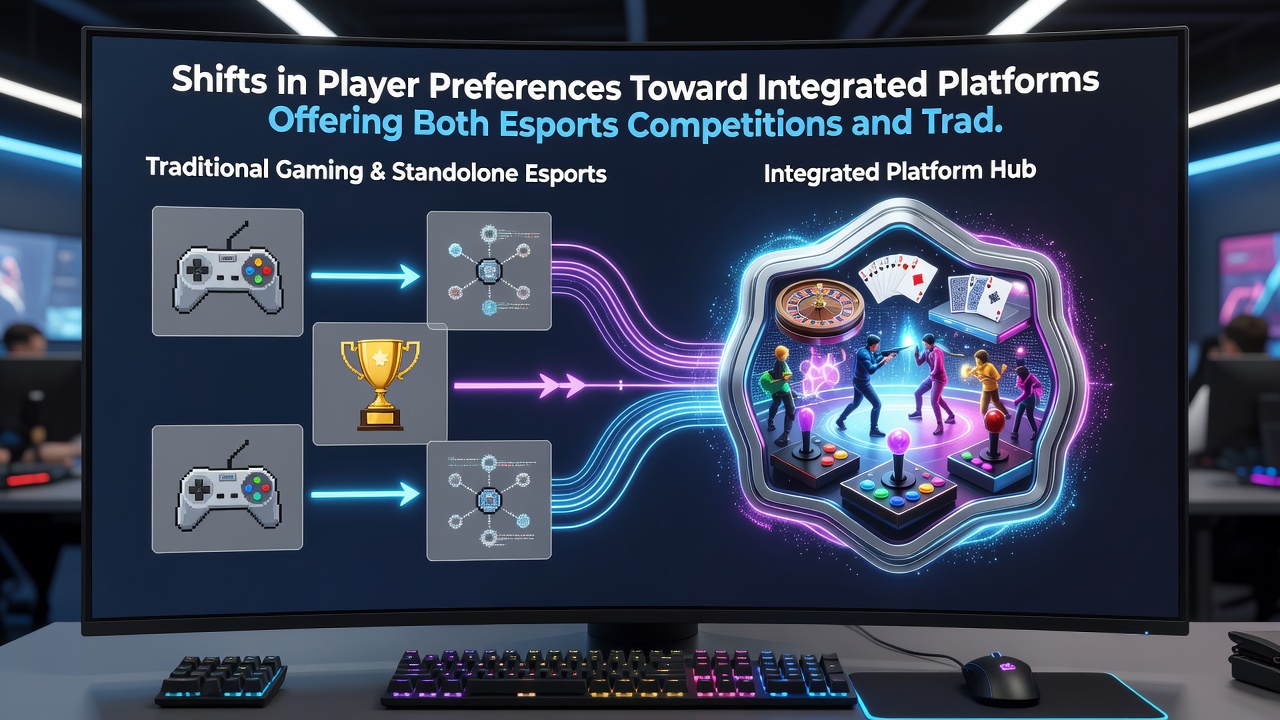
Data from industry analyses show that player preferences have moved toward platforms combining esports competitions with traditional casino table options such as blackjack, roulette, and poker, and this pattern appears across multiple regions since the early 2020s. Researchers tracking digital entertainment note that these integrated environments allow users to switch between competitive esports matches and live dealer table sessions without changing applications or accounts, which reduces friction during extended sessions. Figures from market reports indicate steady growth in user engagement on such hybrid sites, particularly where real-time betting on esports events pairs directly with classic table game interfaces.
Market Data and Growth Patterns
According to statistics compiled by the American Gaming Association, revenue from platforms offering both esports and casino table games rose noticeably between 2023 and 2025, driven by younger demographics seeking variety within single ecosystems. Observers note that this expansion coincides with broader adoption of unified wallets and cross-game loyalty programs, which let players earn rewards across esports tournaments and table sessions alike. In September 2026, updated industry tallies revealed further acceleration in these combined offerings, as operators reported higher average session durations when users accessed multiple game types sequentially.
European data collected through the European Gaming and Betting Association further supports these trends, showing that jurisdictions permitting integrated platforms experienced measurable uptake in both esports viewership metrics and table game participation rates. Those who studied user behavior across borders found that seamless transitions between esports brackets and table game lobbies encouraged repeat visits, whereas fragmented sites saw lower retention. What's interesting is how these patterns hold across different regulatory frameworks without uniform policy changes.
Demographic Shifts and Player Behavior
Surveys conducted by academic institutions, including those affiliated with university gaming research centers, reveal that users aged 18 to 34 represent the largest segment gravitating toward integrated platforms. These individuals often begin sessions with esports competitions before moving to traditional table options, creating longer overall engagement windows. Data indicates that this group values the ability to follow live esports streams while placing table game wagers in adjacent windows, a preference less pronounced among older cohorts who maintain stronger separation between game categories.
One study tracking activity logs on major platforms found that hybrid users completed more transactions per session than those limited to single categories, with esports fans sampling table games at higher rates than expected from historical baselines. Researchers attribute part of this crossover to shared community features such as chat functions and leaderboards that span both esports and casino sections. Yet platform operators also report that some traditional table game enthusiasts now explore esports events after initial exposure through the same interface.
Platform Features Driving Integration
Technical developments enable these shifts through unified interfaces that display esports schedules alongside live table game availability. Providers incorporate shared authentication systems, instant deposit methods, and synchronized progress tracking so that achievements in one area carry visibility in the other. Observers note that features like real-time odds overlays for esports events displayed near table game lobbies encourage exploration, while anti-cheat protocols and responsible play tools apply uniformly across both categories.
Case examples include operators who introduced esports arenas with direct links to blackjack and roulette tables, resulting in documented increases in cross-category play according to internal analytics shared with industry groups. These implementations rely on robust backend systems that handle simultaneous streams of competitive matches and dealer interactions without latency issues that previously discouraged switching. Data shows that platforms investing in these capabilities captured larger shares of the combined market compared with those maintaining separate esports and casino divisions.
Regulatory Considerations Across Regions
Government agencies in multiple jurisdictions have examined how integrated platforms affect compliance frameworks, with bodies such as state regulators in the United States and provincial authorities in Canada reviewing licensing requirements for combined offerings. Reports from these sources indicate that operators must maintain separate audit trails for esports betting versus table game results, even when presented through single user accounts. This separation ensures adherence to distinct taxation and consumer protection rules while allowing the user experience to remain cohesive.
International organizations tracking digital gaming trends have documented that jurisdictions updating rules to accommodate hybrid models saw faster platform launches, whereas stricter separations delayed market entry. Those who've analyzed policy impacts note that clear guidelines on data sharing between esports and table game components help reduce administrative burdens for compliant operators. By September 2026, several additional regions had issued updated frameworks reflecting these realities, though implementation timelines varied.
Conclusion
Available evidence points to sustained movement toward integrated platforms that host both esports competitions and traditional casino table options, supported by usage statistics, demographic patterns, and technical advancements across multiple markets. Regulatory responses continue to evolve in parallel, shaping how these offerings expand while maintaining oversight. Continued monitoring by industry bodies and research institutions will track whether these preferences stabilize or shift further in coming periods.